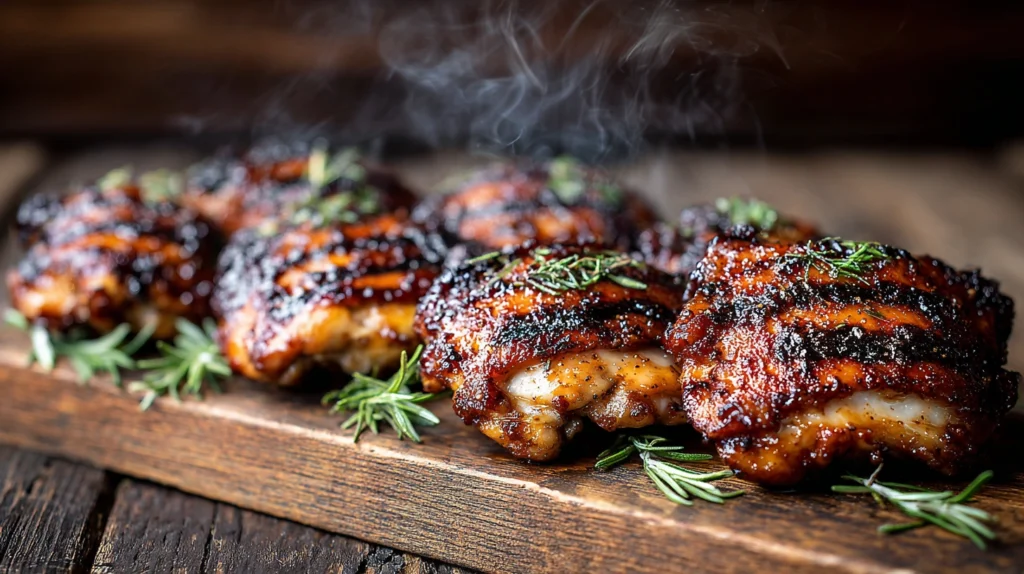
Is BBQ Chicken Healthy? Nutrition Facts Benefits Every Grill Lover Should Know

Look, I get asked this question more than almost anything else at the restaurant. Somebody walks up to the counter, looks at my gorgeous smoked chicken quarters glistening under the heat lamp, and says: “Gus, is BBQ chicken healthy? My wife says I gotta watch what I eat.” And honestly? The answer is one of my favorites to give — because it’s mostly good news.
After 20-plus years of standing over smokers, competing in barbecue competitions across the Midwest, and feeding thousands of people out of my restaurant here in Kansas City, I’ve learned a thing or two about what goes into BBQ chicken and what it does for your body. So let me break it all down for you — the calories, the protein, the sauce situation, and yeah, even the stuff you might not want to hear. Because that’s what friends do. They tell you the truth.
The Short Answer: Yes, BBQ Chicken Is Healthy (With Some Caveats)
Here’s the thing — chicken is one of the leanest, most nutrient-dense proteins you can throw on a grill. When you compare it to a big ol’ slab of ribs or a fatty brisket, BBQ chicken is basically the health food of the barbecue world. But like anything in life, the devil’s in the details. How you cook it, what you put on it, and which cut you use all make a big difference.
So let’s dig into the numbers.
BBQ Chicken Nutrition Facts: What’s Actually in There?

The nutritional profile of BBQ chicken can vary quite a bit depending on whether you’re eating a boneless, skinless breast or going to town on a skin-on thigh dripping with sauce. Here’s a breakdown of the most common scenarios to give you the full picture.
Nutrition Comparison by Cut (Per 100g Serving)
| Cut / Preparation | Calories | Protein | Total Fat | Carbs | Sodium |
|---|---|---|---|---|---|
| Grilled Chicken Breast (skinless) | ~165 | 31g | 3.6g | 0g | ~70mg |
| Grilled Chicken Thigh (skinless) | ~209 | 26g | 10.9g | 0g | ~85mg |
| BBQ Chicken with Sauce (mixed cuts) | ~226 | 23g | 15g | 0.1g | ~335mg |
| Fried Chicken Breast (for comparison) | ~300+ | 24g | 15g+ | 10g+ | ~500mg+ |
A few things jump out right away. That grilled skinless breast is an absolute protein powerhouse — 31 grams of protein per 100 grams with barely any fat. Even the thighs, which I personally think taste better (don’t @ me), are still a solid choice with 26 grams of protein.

And here’s something I love telling people: a standard 4-ounce serving of grilled chicken breast clocks in at only about 120–140 calories. That’s roughly the size of the palm of your hand. You could eat two of those and still be under 300 calories. Try doing that with a cheeseburger.
Key Vitamins and Minerals in BBQ Chicken
Now, this is where chicken really earns its stripes. It’s not just about protein and calories — there’s a whole treasure chest of micronutrients hiding in there that most people don’t talk about.
| Nutrient | Amount Per 4 oz Serving | Why It Matters |
|---|---|---|
| Niacin (Vitamin B3) | ~14mg (90–100% DV) | Energy metabolism, heart health |
| Vitamin B6 | ~0.5mg (~30% DV) | Immune function, brain health |
| Phosphorus | ~200mg (~20% DV) | Bone strength, cell function |
| Selenium | ~24mcg (~35% DV) | Thyroid support, antioxidant defense |
| Potassium | ~255mg (~7% DV) | Muscle function, blood pressure regulation |
| Zinc | ~1mg (~10% DV) | Immune support, wound healing |
I remember years ago, a nutritionist came into my restaurant and we got to talking. She told me that chicken breast is one of the single best dietary sources of niacin — that’s vitamin B3 — which is essential for converting food into energy and keeping your nervous system running smoothly. A single 4-ounce serving basically covers your entire daily recommendation. I didn’t know that back then, and it honestly made me feel even better about what I do for a living.
And selenium? That’s a big one. It acts as an antioxidant in your body, helping protect against oxidative stress and supporting thyroid function. Not too shabby for something you can pick up with your fingers at a backyard cookout.
Tryptophan: The Mood Booster Nobody Mentions
Here’s a fun little bonus that most BBQ articles won’t tell you — grilled chicken breast is a solid source of tryptophan, an essential amino acid. Tryptophan is a precursor to serotonin, which plays a key role in regulating mood, and melatonin, which helps you sleep. So technically, eating my BBQ chicken could put you in a better mood and help you sleep better. You’re welcome.
The Sauce Situation: Where Things Get Tricky
Okay, so here’s where I have to be honest with y’all — and as someone who’s spent years perfecting his own BBQ sauce recipe, this one stings a little. Most commercial barbecue sauces are loaded with sugar.
BBQ Sauce Nutrition Facts (Per 2 Tablespoon Serving)
| Nutrient | Typical Amount |
|---|---|
| Calories | 50–70 |
| Total Carbs | 12–18g |
| Sugar | 10–16g |
| Sodium | 300–400mg |
| Fat | 0–1g |
| Protein | 0g |

Yeah. You read that right. Some store-bought BBQ sauces pack 16 grams of sugar in just two tablespoons. That’s almost as much sugar as a handful of gummy bears. And let’s be real — nobody uses just two tablespoons. Most people are slathering it on like they’re painting a fence.
So when people ask me “is BBQ chicken healthy?” and I say “with some caveats,” this is the biggest one. The chicken itself? Fantastic. The sauce you drown it in? That’s where the nutritional wheels can come off.
How to Make Your Sauce Healthier
Over the years, I’ve developed a few strategies for keeping the flavor without all the sugar and sodium. Here’s what works for me:

Use a dry rub instead. My competition rub is just paprika, garlic powder, onion powder, a touch of brown sugar, black pepper, cumin, and cayenne. You get tons of flavor with a fraction of the sugar and sodium of bottled sauce.
Make your own sauce. When I do use a sauce, I make it from scratch. That way I control exactly how much sugar and salt goes in. I use tomato paste as a base, a splash of apple cider vinegar, a little honey instead of corn syrup, and plenty of spices. The flavor is deeper and more complex, and you’re cutting sugar by 40–50% compared to most store brands.
Apply sauce at the end. This is a grilling tip AND a health tip. If you brush sauce on too early, it burns and chars (more on that in a minute). But if you wait until the last 5–10 minutes of cooking, you get that gorgeous glaze without turning your chicken into a sugar-coated charcoal briquette.
Try sugar-free or low-sugar options. There are some decent sugar-free BBQ sauces on the market now. They won’t taste exactly like the sweet Kansas City-style sauce I grew up on, but some of them are surprisingly good.
How Cooking Method Affects Healthiness
Alright, so let’s talk about the actual cooking. Because not all BBQ chicken is created equal, and the way you cook it matters more than a lot of people realize.
Grilling vs. Other Methods
Grilling is actually one of the healthiest ways to cook chicken. When you grill, excess fat drips away from the meat rather than sitting in a pool around it like when you pan-fry. You don’t need to add a bunch of oil. And the high heat actually helps the chicken retain a lot of its vitamins and minerals — particularly those B vitamins and that selenium I mentioned earlier.
Compare that to deep-fried chicken, which can double or even triple the calorie count and add a heap of unhealthy fats. A grilled chicken breast at 165 calories versus a fried one at 300-plus? That math is easy.
The HCA and PAH Factor: Let’s Talk About Charring
Okay, so this is the part of the article where I have to put on my “responsible pit master” hat. And believe me, it’s not my favorite hat — but it’s an important one.
When you cook any meat at high temperatures — and we’re talking above 300°F, which is basically all grilling — certain compounds can form. The two main ones are heterocyclic amines (HCAs) and polycyclic aromatic hydrocarbons (PAHs). HCAs form when amino acids and creatine in the meat react with intense heat. PAHs form when fat drips onto the flames, creating smoke that deposits these compounds onto the surface of your food.
Now, before you throw your grill in the trash, let me give you some perspective. The research on this comes primarily from laboratory animal studies where the doses were extremely high — way more than you’d get from normal eating. Population studies in humans haven’t established a definitive causal link. But the research is enough that organizations like the National Cancer Institute and AICR consider it worth paying attention to.
Here’s the good news, though: chicken actually produces fewer of these compounds than red meat, because it’s lower in fat (less dripping, less smoke) and contains less creatine.

My Tips for Reducing HCAs and PAHs
After reading up on this stuff years ago, I made some changes to my own grilling technique. And honestly? The chicken tastes better because of it.
- Marinate your chicken. Studies have shown that marinades containing herbs like rosemary, thyme, or garlic — plus acidic ingredients like vinegar or citrus juice — can reduce HCA formation significantly. Some research suggests reductions of up to 60–70%. And a good marinade makes the chicken more tender and flavorful anyway, so this is a win-win.
- Avoid charring. I know, I know — some people love those blackened bits. But those char marks are where HCAs and PAHs concentrate. If you do get some charring, trim it off before eating.
- Use indirect heat. Instead of blasting your chicken directly over the flames, set up a two-zone fire and cook it on the cooler side. Lower heat = fewer harmful compounds, and the chicken stays juicier.
- Flip frequently. Turning the chicken often prevents any one side from getting too much heat exposure. I flip my chicken quarters every 8–10 minutes.
- Pre-cook if you’re in a hurry. You can partially cook chicken in the oven or microwave first, then finish it on the grill to get that smoky flavor with less total time over high heat.
- Choose skinless cuts. Less fat on the chicken means less dripping, which means less smoke and fewer PAHs.
BBQ Chicken for Specific Health Goals
Weight Loss
If you’re trying to lose weight, BBQ chicken (especially the breast) is one of your best friends. High protein keeps you full longer, and the calorie count is remarkably low for how satisfying it is. I’ve had customers tell me they lost 30, 40 pounds and my grilled chicken breast plate was a staple of their diet the whole time. Just watch the sauce and the sides — that’s where the calories sneak in.
Muscle Building
With roughly 25–31 grams of protein per serving and all nine essential amino acids, grilled chicken breast is basically nature’s protein shake. It’s a complete protein that supports muscle repair and growth, which is why you see it on basically every bodybuilder’s meal plan ever created. After a workout, a grilled chicken breast with some rice and veggies is about as perfect a recovery meal as you can get.
Heart Health
Chicken breast is low in saturated fat and cholesterol compared to red meat. The B vitamins — especially niacin — support cardiovascular function, and the potassium helps regulate blood pressure. When you swap out a fatty cut of beef for grilled chicken even a couple nights a week, your heart will thank you.
Blood Sugar Management
Since plain grilled chicken is essentially zero carbs, it won’t spike your blood sugar. The protein also slows digestion and helps with satiety, making it a smart choice for people managing type 2 diabetes or anyone watching their blood sugar levels. Just keep the sugary sauces in check — use dry rubs or low-sugar marinades instead.
My Healthier BBQ Chicken Recipe
Alright, I’ve thrown a lot of information at you. Now let me give you something you can actually cook tonight. This is my go-to recipe for BBQ chicken that’s delicious and nutritious.
Gus’s Healthier Smoked Chicken Breast
Ingredients
- 4 boneless, skinless chicken breasts (about 6 oz each)
- 2 tablespoons olive oil
- 1 tablespoon smoked paprika
- 1 teaspoon garlic powder
- 1 teaspoon onion powder
- ½ teaspoon cumin
- ½ teaspoon black pepper
- ¼ teaspoon cayenne pepper
- 1 teaspoon kosher salt
- Juice of 1 lemon
- 2 sprigs fresh rosemary (for the marinade)
For the Low-Sugar BBQ Glaze
- ¼ cup tomato paste
- 2 tablespoons apple cider vinegar
- 1 tablespoon honey
- 1 teaspoon Worcestershire sauce
- ½ teaspoon smoked paprika
- ¼ teaspoon garlic powder
- Pinch of black pepper
- 2–3 tablespoons water (to thin)

Instructions
- Marinate: Combine the olive oil, lemon juice, rosemary, and half the spice blend. Coat the chicken and let it sit in the fridge for at least 2 hours, ideally overnight. This step does double duty — tenderizing the meat and reducing HCA formation.
- Prep the glaze: Whisk all the glaze ingredients together in a small bowl. Taste and adjust. This has about 60% less sugar than most store-bought sauces.
- Set up your grill: Fire up a two-zone setup — direct heat on one side, indirect on the other. You want the indirect side at about 350–375°F.
- Grill: Place chicken on the indirect side. Cook for about 20–25 minutes, flipping every 8–10 minutes. Use a meat thermometer — you’re aiming for 165°F internal temperature.
- Glaze: During the last 5 minutes, brush the low-sugar glaze on both sides and move the chicken to the direct heat side briefly to caramelize. Watch it like a hawk — you want a glaze, not a char.
- Rest: Let the chicken rest for 5 minutes before slicing. This redistributes the juices and makes every bite tender.
Approximate Nutrition Per Serving
| Nutrient | Amount |
|---|---|
| Calories | ~220 |
| Protein | ~38g |
| Fat | ~6g |
| Carbs | ~4g |
| Sugar | ~3g |
| Sodium | ~450mg |
Compare that to a typical BBQ chicken plate from a restaurant — which can easily run 400–600+ calories with all the sauce — and you can see why this version is a game changer.
Healthier Side Dishes to Pair With Your BBQ Chicken
A great piece of BBQ chicken deserves sides that complement it nutritionally, not sabotage it. Here are some of my favorites:

| Side Dish | Why It Works |
|---|---|
| Grilled vegetables (bell peppers, zucchini, asparagus) | Adds fiber, vitamins, and antioxidants with minimal calories. Plus, no HCAs form on grilled vegetables. |
| Coleslaw (vinegar-based, not creamy) | Crunchy, tangy, and much lighter than mayo-based versions. |
| Brown rice or quinoa | Complex carbs for sustained energy, plus extra protein from quinoa. |
| Sweet potato (baked or grilled) | Packed with vitamin A, fiber, and natural sweetness that pairs perfectly with smoky chicken. |
| Mixed green salad with citrus vinaigrette | Fresh, light, and adds the fiber that chicken doesn’t provide on its own. |
Frequently Asked Questions
Is BBQ chicken healthier than fried chicken?
Absolutely, and it’s not even close. Grilling doesn’t require added oils or breading, so you’re cutting significant calories, carbs, and unhealthy fats. A grilled breast runs about 165 calories per 100 grams, while fried chicken can top 300 calories for the same amount.
Is eating BBQ chicken every day okay?
It can be part of a healthy daily diet, but variety is important. I’d say enjoy it 3–4 times a week and rotate in other proteins like fish, beans, and eggs on the other days. This ensures you’re getting a full spectrum of nutrients — especially omega-3 fatty acids from fish, which chicken doesn’t provide much of.
Is chicken thigh healthier than chicken breast?
Breast is leaner with more protein and fewer calories. But thighs aren’t unhealthy — they just have more fat (mostly unsaturated) and a bit more iron. I use thighs when I want richer flavor and the extra fat helps keep things moist during long cooks. Both are solid choices.
Does removing the skin make a big difference?
It does. The skin adds roughly 50–100 extra calories and several grams of fat per serving, mostly saturated. That said, I cook with the skin on for flavor and moisture during grilling, then remove it before eating if I’m trying to keep things lean. Best of both worlds.
Are store-bought BBQ sauces unhealthy?
Many of them are high in added sugar and sodium. A two-tablespoon serving of a typical brand can contain 10–16 grams of sugar. Look for sauces labeled “sugar-free” or “low sugar,” or better yet, make your own so you control what goes in.
The Bottom Line
So, is BBQ chicken healthy? You bet it is — especially when you make smart choices about your cuts, your sauce, and your cooking technique. Chicken is one of nature’s best lean protein sources, packed with B vitamins, selenium, phosphorus, and all nine essential amino acids. Grilling it preserves those nutrients beautifully while letting excess fat drip away.
The key is being mindful about the extras. Go easy on the sugar-heavy sauces, avoid charring your meat into oblivion, and pair your chicken with nutrient-rich sides. Do that, and you’ve got a meal that’s not just healthy — it’s one of the most delicious things you can eat.
I’ve been cooking BBQ chicken for two decades now, and I still get a thrill every single time I pull a perfectly grilled breast off the fire. There’s something about the way the smoke, the spice, and the char all come together that just feeds the soul. And knowing that I’m serving something that’s genuinely good for people? That makes it even better.
So fire up that grill, trust the process, and enjoy every bite. Your body — and your taste buds — will thank you for it.
Happy grilling, friends.
About The Author